I’d still tell most people to buy an index fund.
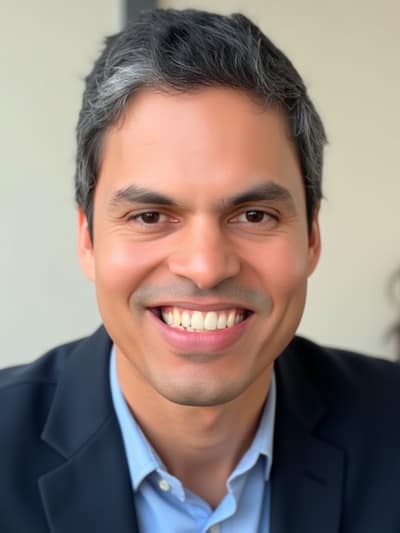
I’m Aslam Ghouse. I spent fourteen years as a systematic trader, nine of them at Goldman Sachs and five at RBS, and I’ve been a CFA charterholder since 2015. This page explains why I run a stock portfolio anyway, with my own money in it.
- Now
- Running Ticker Nerd — the Ticker Nerd 20 and the rank behind it — since 2024
- Before
- Systematic trader — nine years at Goldman Sachs, five at RBS
- Credentials
- CFA charterholder since 2015
- Skin in the game
- My own money is in the same twenty stocks members see
Index funds leave a gap.
A Goldman trading floor shows you how much an outsider never sees: the flows, the positioning, who is on the other side of the trade. So for most of my career I’d have told you to buy an index fund. For most people, I still would.
But index funds buy by size. The bigger a company gets, the more of every new dollar it receives, whatever its price. Index funds now hold more money than actively managed funds in the US, so a growing share of the market no longer asks whether a price makes sense.
That leaves room below the giants. Good companies there get less attention, and their prices can drift away from what the business is worth. Buffett and Peter Lynch made their names in that space: they bought good businesses at sensible prices and waited for the market to catch up.
Prices move when expectations turn out wrong.
Every share price carries a forecast, and the price moves when the company does better or worse than it. That’s why a great company priced for greatness can go nowhere.
Fifty years of published research has found measurable signs of where those forecasts tend to be wrong: a cheap price, rising profits, analysts raising their estimates, earnings backed by real cash. They’re called factors. They have held up across decades because the human mistakes behind them keep repeating.
Measuring signals like these and letting rules act on them was my day job. Ticker Nerd scores about 4,600 US stocks on the factors every day, and the rules buy the twenty that come out best. Most sit outside the S&P 500, in the part of the market index funds barely own.
There’s no easy money in it.
The rules hold companies most people have never heard of. The swings can be large, and there are long stretches when the portfolio trails the market. Those costs are probably why the approach hasn’t been competed away.
With more information than anyone can read, and AI writing more of it every day, I think the useful thing is to do less: look at the few numbers that matter, and let the rules act when the market overreacts.
Run in the open.
You shouldn’t have to take my word for any of this. The factors are published, every trade is on the record with the losers included, and every return says whether it was traded or backtested.
AI helps here too, and I say so: it drafts the briefs and runs the plumbing. It never picks a stock. The rules do that.
Ticker Nerd was founded in 2020 by Samuel Renotte and Luciano Viterale. I took it over in 2024 and rebuilt how the research is done. My name is on it, and my money is in the same twenty stocks members get. I answer the email.
Where to find us.
- Registered
- Ticker Nerd · ABN 55 429 674 567
- Address
- 189 Queen St, Suite 1171, Melbourne VIC 3000, Australia
- hello@tickernerd.com