Seeking Alpha Pro Review (2026): Is $2,400 a Year Worth It?
Seeking Alpha Pro costs $2,400 a year, $2,149 through our link after an $89 first month. A hands-on look at the Pro Quant Portfolio, and who it is for.
 By Aslam Ghouse, CFA · Ex-Goldman Sachs systematic trader · Updated 16 Sept 2026
- Our rating
- 4.5 / 5
- Trial
- The $89 first month is a paid trial; cancel inside it and the $2,149 is not charged
- Refund
- None. Fees and paid-trial fees are non-refundable; cancel any time and access runs to the end of the billing period
- Best for
- Active investors with a large portfolio who want a 30-stock quant model portfolio that resets every week, plus coverage of the smallest stocks
We earn a commission if you subscribe through this link, at no extra cost to you. It has no bearing on what the model ranks or what we cover.
Some links in this article are affiliate links. How we get paid · How we review.
The folks at Seeking Alpha gave me access to Seeking Alpha PRO, their top-end service, so I could look under the hood. This is the Pro-tier review; the full Seeking Alpha review covers Premium and which tier to buy.
Pro costs $2,400 a year. Through our link the first month is $89 as a paid trial. After that the first year is $2,149, and it renews at $2,400 a year. Prices were checked on Seeking Alpha's Pro offer page in September 2026. At that price, if you have $10k to invest, this is not for you.
Seeking Alpha PRO vs Seeking Alpha PREMIUM
Pro includes everything in Premium ($299 a year). That means the Quant Ratings, a daily score built from each company's reported numbers, and the factor grades behind them. It also means the articles, the screener and the portfolio tools. The extra $2,100 buys three things:
- The PRO Quant Portfolio – a model portfolio of 30 stocks, equally weighted. It is rebalanced every Monday, which means the Quant system resets the holdings each week. It has no market-cap floor, so no company is too small to be included
- Top Analyst Ideas – the community's contributors ranked by their published success rate, with a filter on their latest calls
- Daily upgrades, downgrades and short ideas, which are stocks to bet against
If those three are not the reason you are here, Premium is the tier to buy. The Seeking Alpha review compares Premium, Alpha Picks and Pro side by side.
What is Seeking Alpha PRO?
In my opinion, Pro's main angle is that it tilts towards micro caps. These are the smallest listed companies, and Wall Street analysts are less likely to cover them.
Investing in micro caps is much riskier, but it comes with greater upside.
Wall Street does not stay away from micro caps because they are “too risky”. It stays away because they are “too small”.
A $5 billion fund cannot take a meaningful stake in a company with a market cap of just $100 million. It would end up owning the whole company, or moving the share price a long way, because so few of the shares trade.
That is why the micro cap space is fertile ground for the individual investor.
I think this angle is what makes Pro useful. You get:
- Exclusive coverage of stocks with NO Wall Street ratings
- You can narrow the list to buys and strong buys
- Sort by the most recent ratings, so you have the latest calls
- These stocks are typically the micro caps that are too small for Wall Street
- A PRO Quant Portfolio (PQP)
- An active portfolio of 30 stocks (more details below)
- You also get detailed updates, including a webinar on the latest weekly rebalance and performance
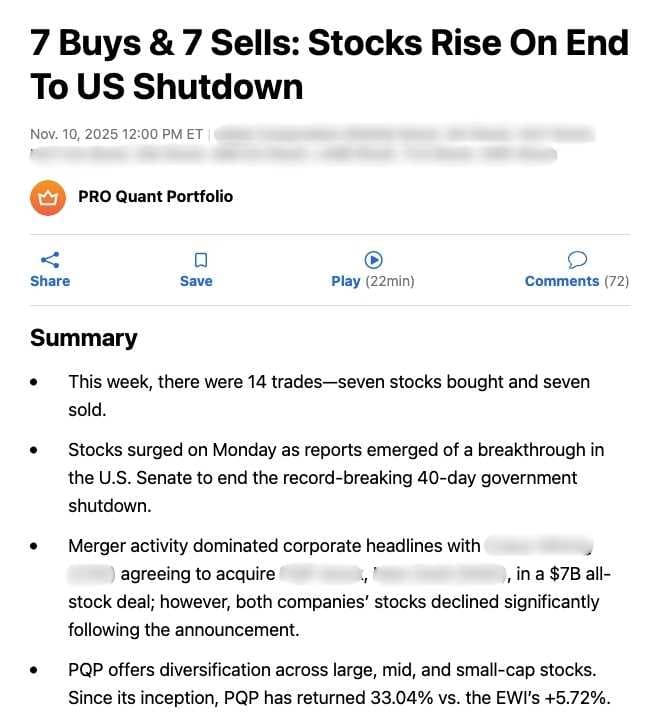
PQP rebalance updates
- Top Analyst Ideas
- Filter all of the Seeking Alpha community’s top analysts by success rate, average return and industry
- List all their latest stock calls and filter by strong buys
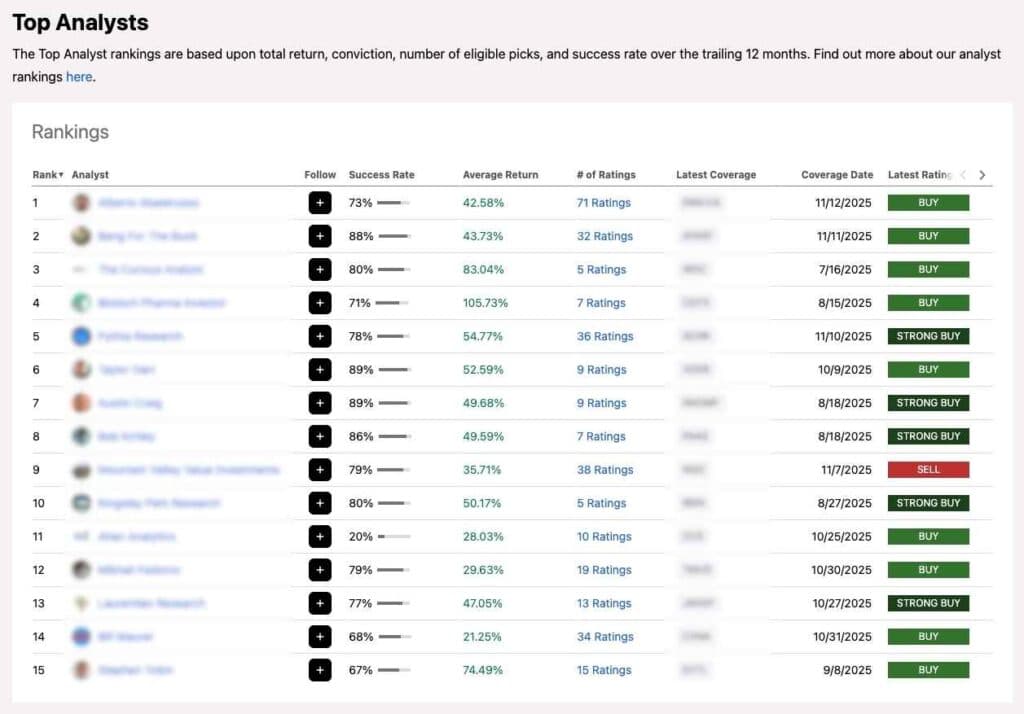
Top 15 Analysts right now according to Seeking Alpha Pro
- Short Ideas
- A more advanced feature: ideas on stocks to short, which means betting on the price falling.
Seeking Alpha PRO Quant Portfolio vs Seeking Alpha ALPHA PICKS
You may also have come across Seeking Alpha’s Alpha Picks. We have a full Alpha Picks review.
How does Pro’s Quant Portfolio differ from Alpha Picks?
| Seeking Alpha PRO | Seeking Alpha ALPHA PICKS | |
|---|---|---|
| Style | Active | Passive – buy and hold |
| Regions/Sectors | All U.S. listed, including ADRs | U.S. common stocks (no ADRs), No REITs |
| Market Cap | No restrictions | Companies with a market cap > $500M |
| Trading Frequency | Weekly (averages 2–3 new trades per week) | 2-3 trades per month |
| Turnover | Averages 2–3 positions weekly | Aims to hold positions for at least one year |
| Holdings | Always 30 positions – equally weighted | Varies – currently has 41 positions – lets winners run |
| Capital Invested | Fixed starting amount divided across 30 holdings | Increases as you keep investing in the latest picks |
| Benchmark | S&P 500 Equal Weight Index | S&P 500 Index |
Source: PRO and Alpha Picks
In short, Pro is for more active traders and investors, because the portfolio rebalances every week.
Alpha Picks is for more passive investors who prefer to buy and hold. It adds around 2 stocks to the portfolio every month.
What Seeking Alpha publishes about the PRO Quant Portfolio
The Pro Quant Portfolio has no market-cap floor, so the strategy reaches into micro caps, where fewer shares trade and prices swing more. It launched in June 2025. Seeking Alpha publishes its return against the equal-weighted S&P 500 on the portfolio's own page. The track record is short, and a strategy that holds micro caps needs a full market cycle before its numbers mean much.
What the holdings say about the strategy is more useful than the return so far. When I looked, the portfolio had held 72 different stocks in its first six months. Of the 30 it held at the time:
- 3 had market caps under $200 million
- 7, almost a quarter of the portfolio, had market caps under $1 billion
- Just 3 had market caps above $100 billion
- The largest was around $1 trillion
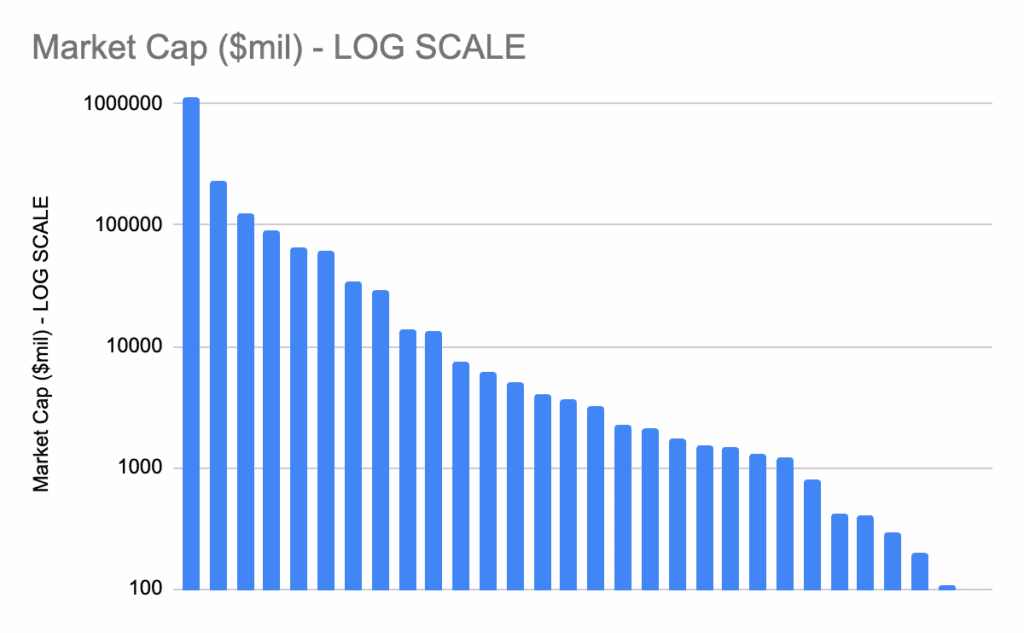
Pro Quant Portfolio's (PQP) 30 stocks by market cap
Learn more about how Seeking Alpha PRO works from their websiteWho Seeking Alpha PRO is for
First, the $2,400 a year price tag makes clear that this is for more serious investors. Seeking Alpha's own website says it is aimed at:
- High net worth individuals (I reckon that means people with at least $500k to invest)
- Seasoned individual investors (not beginners)
- Investment professionals like RIAs (registered investment advisers), analysts and financial planners
- Institutions (hedge funds, banks and other investment firms)
Pro prices out small investors on purpose, and rightly so, because this is a high-risk, high-reward service.
As mentioned, it focuses on the micro caps Wall Street does not cover, where few shares trade. That adds a lot to how volatile the holdings are.
But for someone who knows what they are doing, I think Pro is worth it.
Seeking Alpha PRO Alternatives
There is plenty of value in Pro for a full-time investor who will use the resources and insights on the platform.
If you have less time, or less experience, consider Ticker Nerd’s own Ticker Nerd Premium service.
Membership is the Ticker Nerd 20: twenty growth stocks picked by published rules and reviewed every four weeks. Every holding has a plain-English brief, and every trade is published. It is $39 a month or $199 a year.
We focus on making high quality investment insights accessible to the everyday investor. If that is you, come and check us out.
Quick answers.
What’s the difference between Seeking Alpha Premium and Seeking Alpha PRO?
Seeking Alpha Premium ($299 a year) covers the basics: real-time stock prices, news, Quant Ratings, Wall Street analyst ratings and community analyst ratings. Seeking Alpha Pro ($2,400 a year) includes everything in Premium. It adds exclusive coverage of micro-cap stocks, the smallest listed companies, which have no Wall Street coverage. It adds the Pro Quant Portfolio, 30 stocks whose holdings are reset every week. And it adds top analyst ideas filtered by success rate, and short ideas.
Who is Seeking Alpha PRO designed for?
Seeking Alpha Pro targets high net worth individuals, typically with $500k or more to invest, seasoned investors, and investment professionals such as RIAs and analysts. It also targets institutions such as hedge funds and banks. It focuses on volatile micro-caps and costs $2,400 a year, so it is not suitable for beginners or for smaller portfolios.
How does the PRO Quant Portfolio differ from Alpha Picks?
The Pro Quant Portfolio is actively managed. It trades every week, two to three trades on average, and always holds exactly 30 equally weighted positions. It has no market cap limit and measures itself against the equal-weighted S&P 500. Alpha Picks is passive, with two to three trades a month, and holds each position for at least one year. It currently has 41 positions, because it lets winners run. It excludes stocks under $500M market cap and measures itself against the standard S&P 500.
Why does Seeking Alpha PRO focus on micro-cap stocks?
Micro-caps are a chance for individual investors because large funds cannot take a meaningful position in a small company. A fund would end up owning the whole company, or moving the price a long way, because so few of the shares trade. That makes micro-caps fertile ground for retail investors who will take on higher risk for potentially greater upside.
How risky are micro-cap stocks?
Micro-cap stocks carry much higher risk than large-cap stocks. They are more volatile, with wider price swings, and fewer of their shares trade each day. They often have no Wall Street coverage, and they fail more often. The potential upside is greater, but you could lose a large part or all of your investment. This level of risk is why Pro is designed for experienced investors only, not beginners.
Is there a track record for the PRO Quant Portfolio?
A short one. The Pro Quant Portfolio launched in June 2025, and Seeking Alpha publishes its return against the equal-weighted S&P 500 on the portfolio page. It has little more than a year of history and holds micro caps, so it has not yet been through a full market cycle. Read the published figure as a start rather than a record.
What’s a more affordable alternative to Seeking Alpha PRO?
For investors with less time or smaller portfolios, Ticker Nerd membership is $39 a month or $199 a year. You get the Ticker Nerd 20: twenty growth stocks picked by rules and reviewed every four weeks, with a plain-English brief on every holding and every trade published.
The market re-ranks every week. Monday's email says what moved.
Computed off the Friday close and sent before the US open.
Market Radar reports the week’s largest rank changes across roughly 4,600 US stocks, the factor behind each one, and where the market went.